Lot 1139
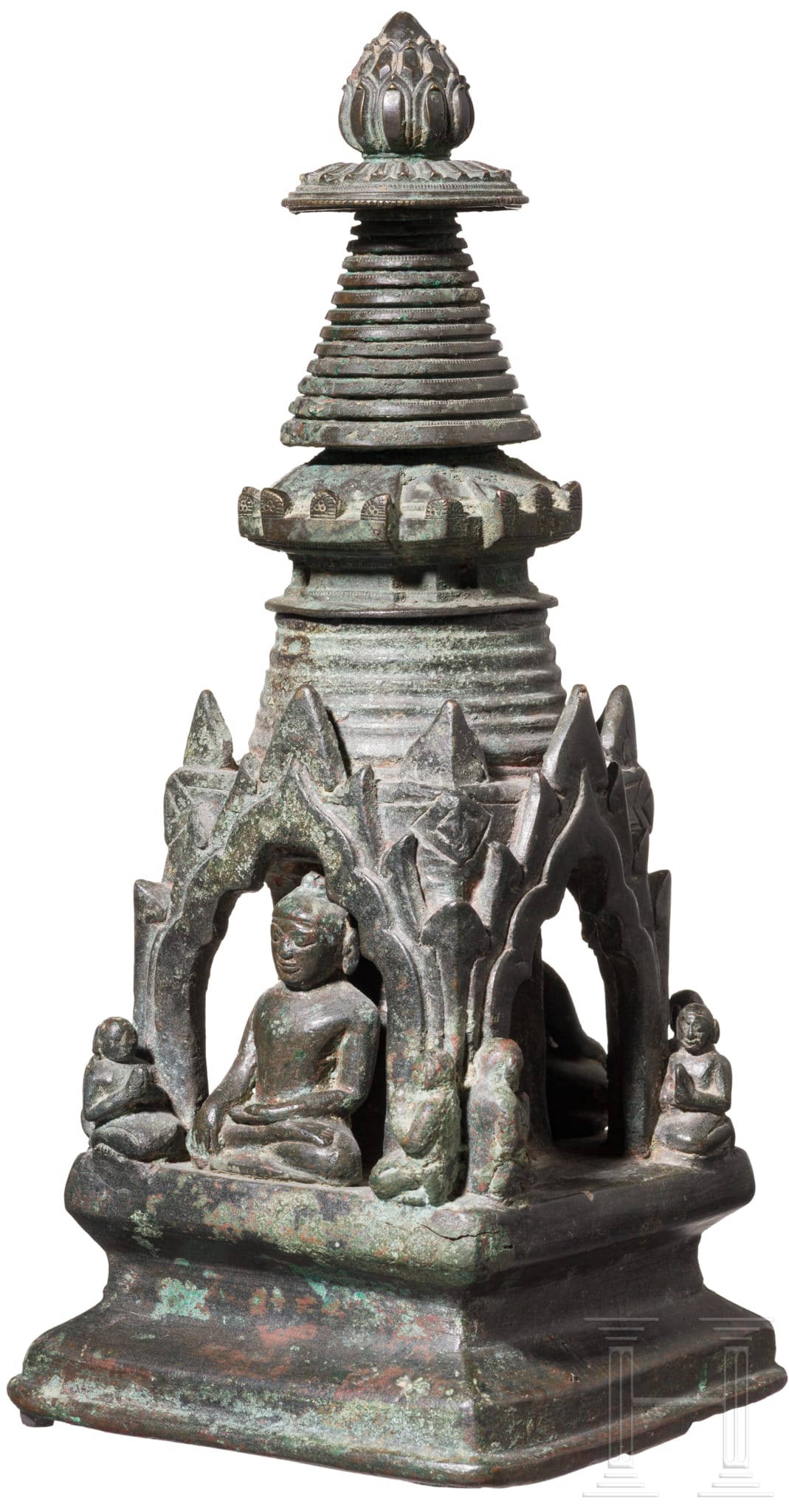
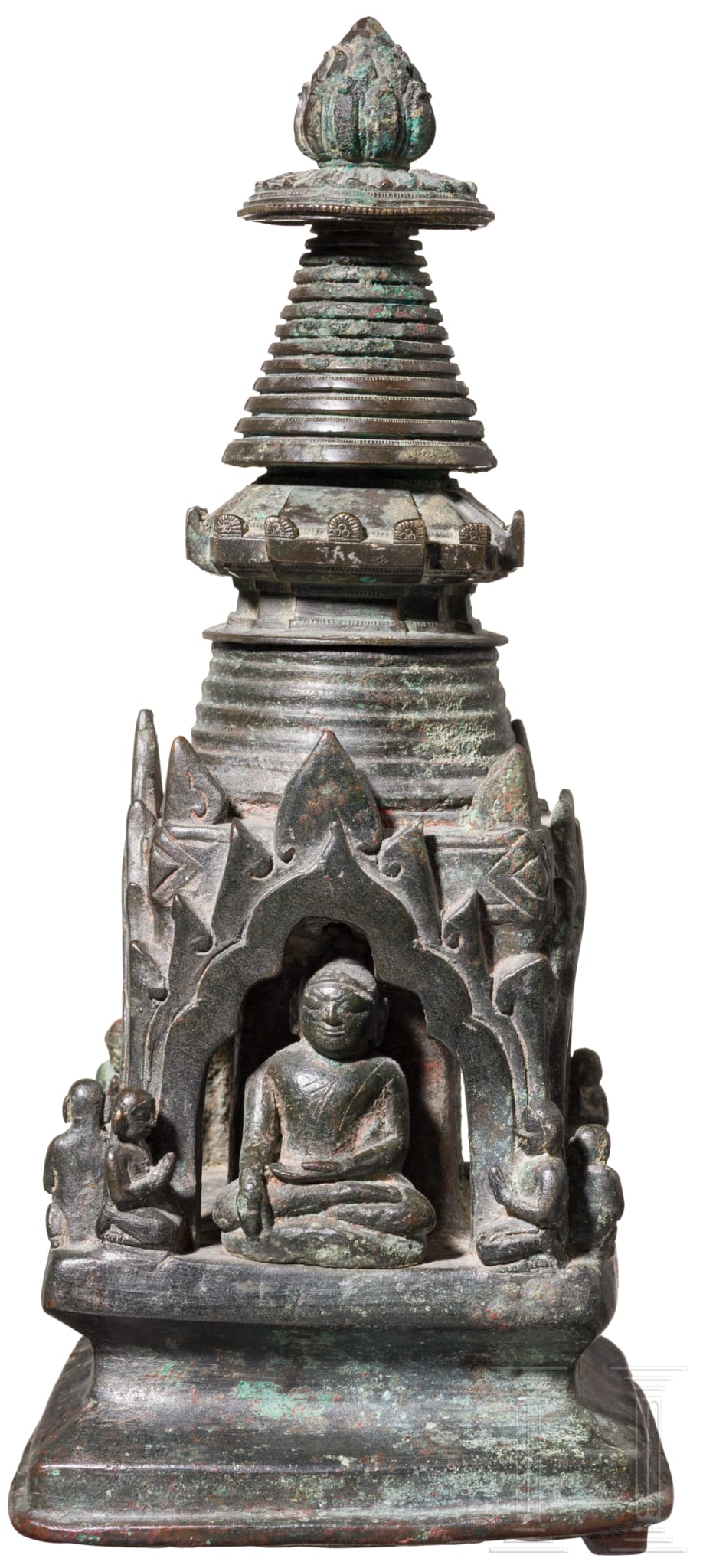
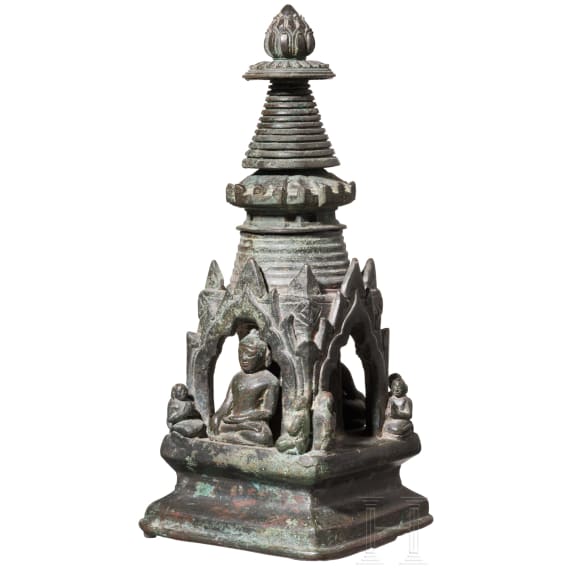
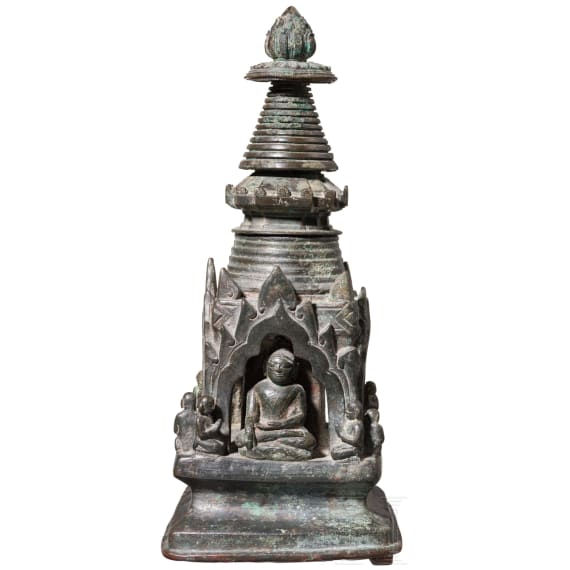
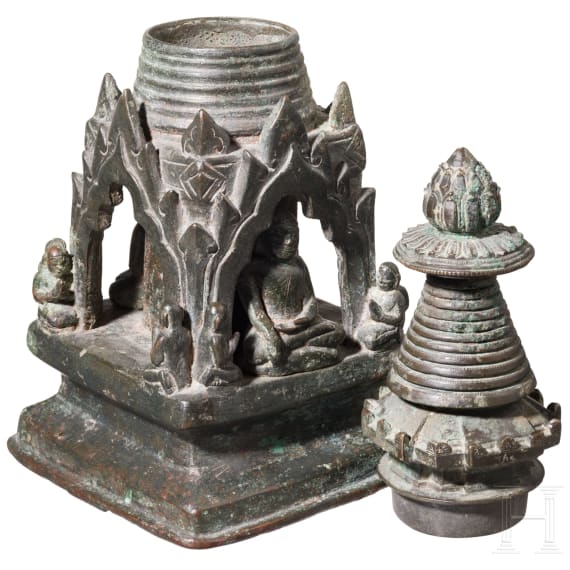
Bronze votive stupa with a reliquary chamber and depictions of Shakyamuni Buddha, flanked by two worshippers. Pagan Kingdom (Myanmar), 12th – 13th centuries.
Works of Art, Antiquities & Ancient Art | A109kua | Live auction | 1190 Lots
Description
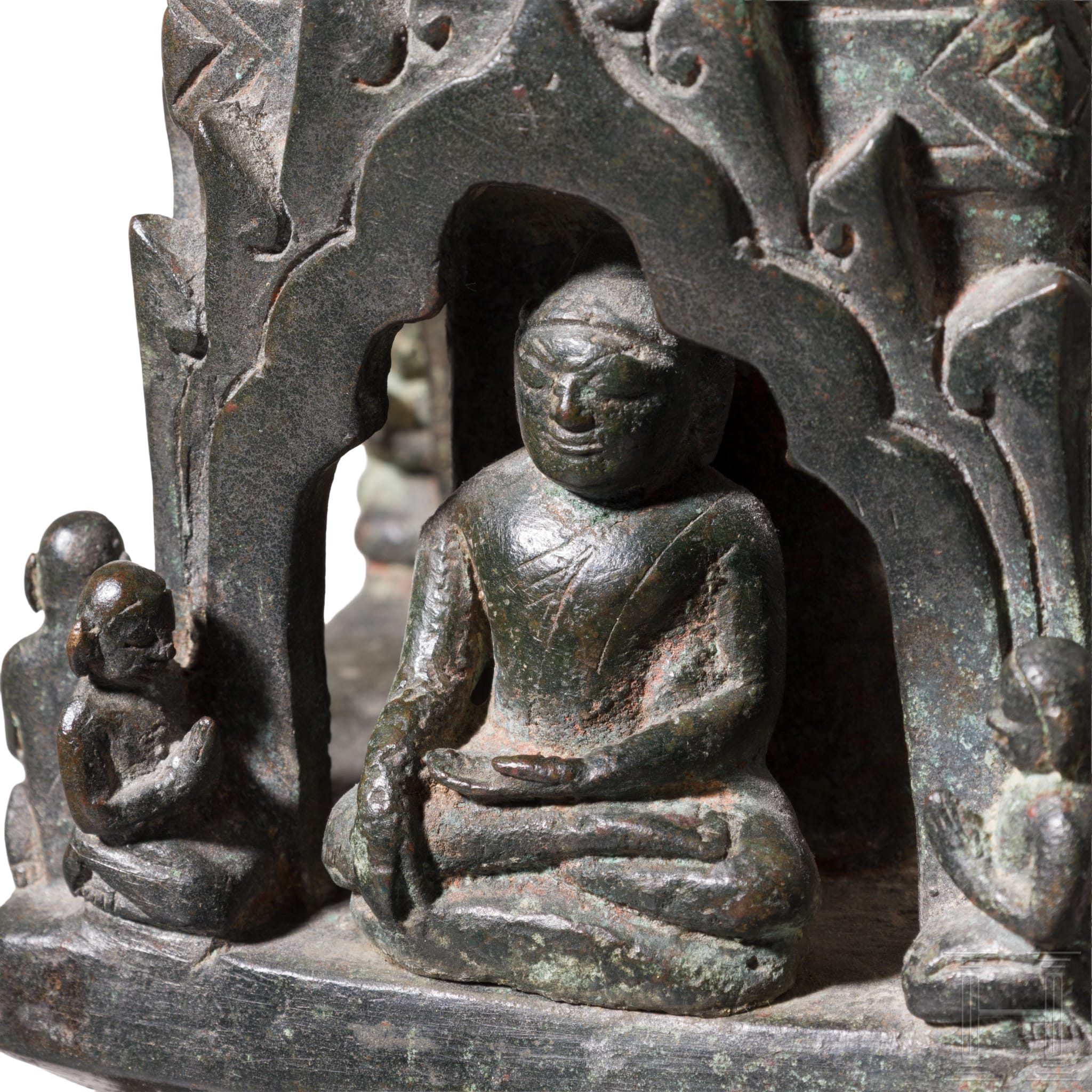
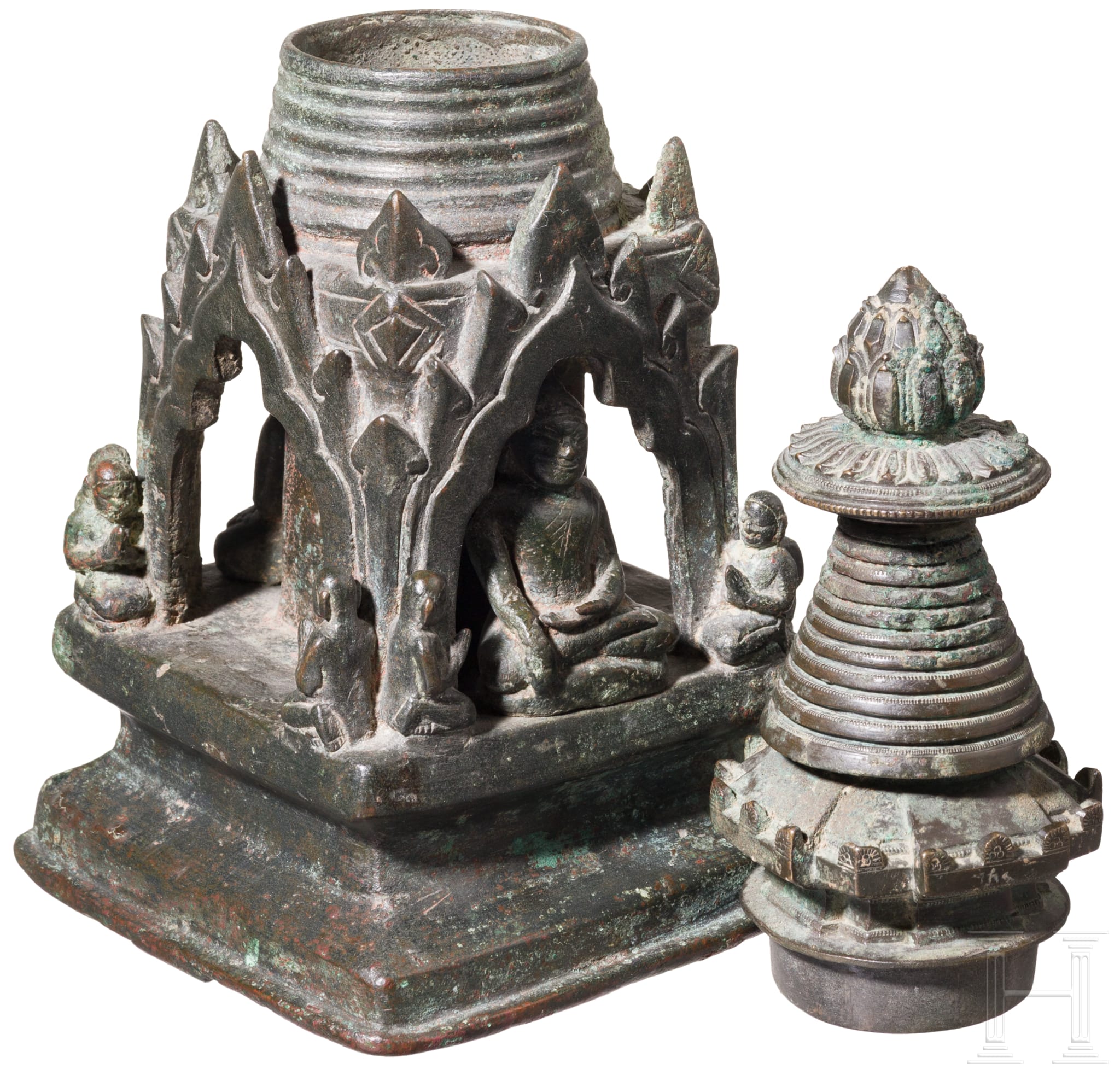
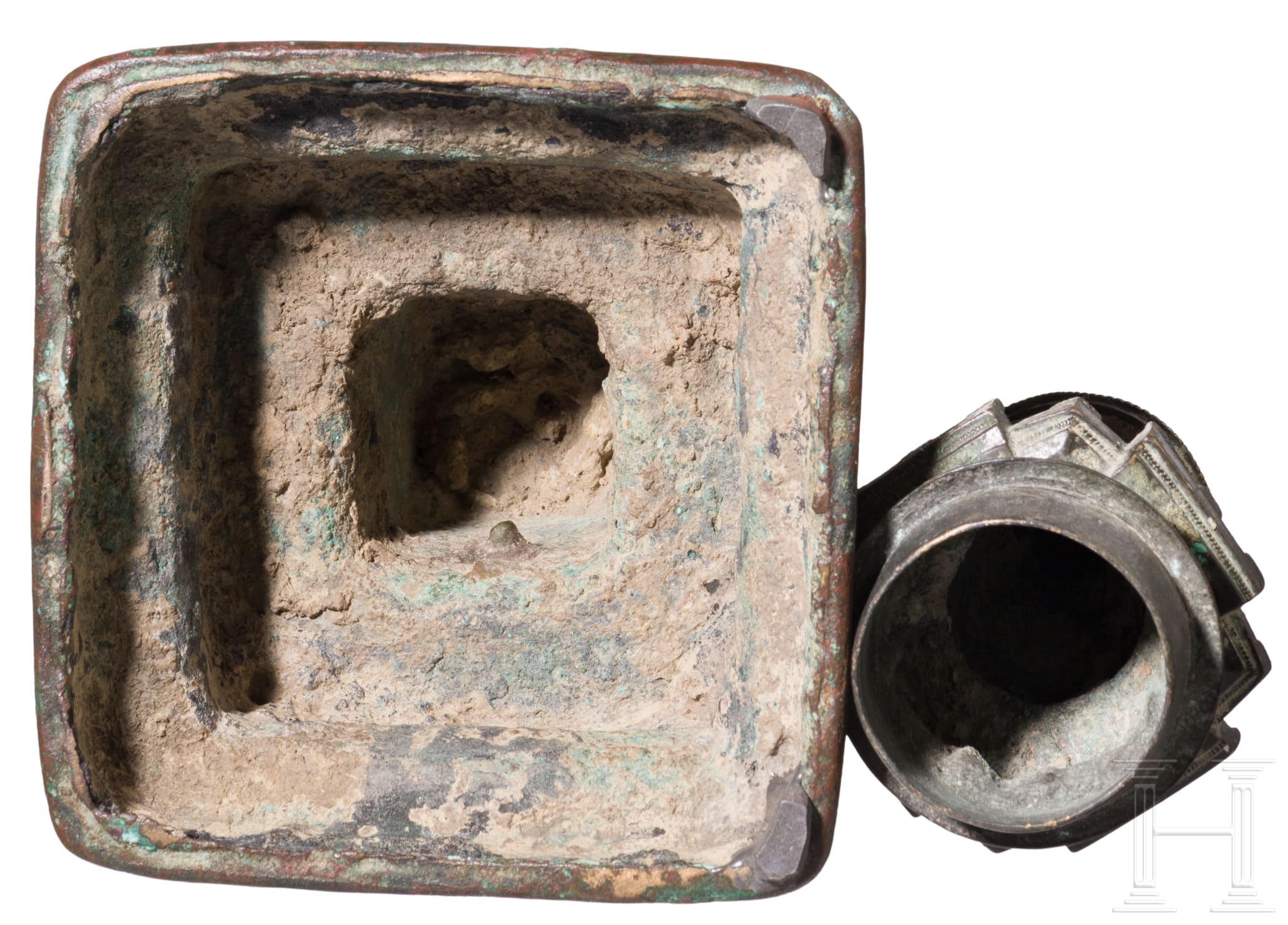
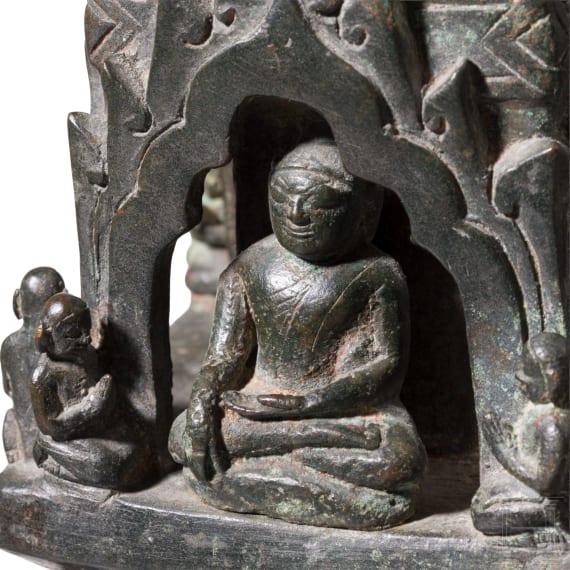
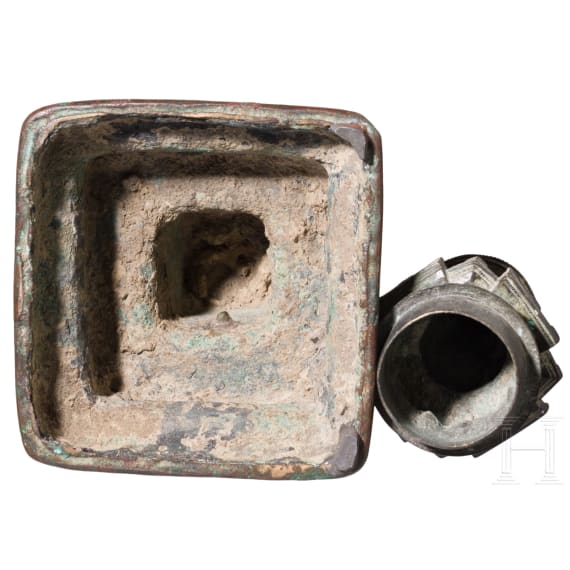
A square, stepped, profiled base, topped by a platform with a square column in the center; in front of it are four niches with a flaming wreath, each housing a figure of Buddha Shakyamuni in the Bhumisparsha-mudra (touching and invoking the earth as a witness to enlightenment); preserved in two opposite niches, missing from the other two. The Buddha figures were carved separately and secured to a hole in the center of the lower part of the central column via a square pin on the back; all were produced using the same mold. On either side of the niches, to the left and right, is a kneeling worshipper, depicted significantly smaller than the Buddha figure, with the palms pressed together in front of the chest in the Anjali-mudra (Namaskara-mudra), a gesture of reverence. Above the niches is a canopy with four corner acroteria. Above this is the dome, reshaped into a stepped cone (symbolizing Mount Meru, the World Mountain), which is hollowed out to serve as a reliquary. The other “architectural” components of the votive stupa are cast separately and can be inserted from above into the opening of this conical dome using a cylinder located beneath the base. The upper section, which is attached to the base, features a balcony-like, rectangular platform (Harmika) at the bottom, bounded on the outside by pillars; this is the abode of the 33 gods in Hindu tradition (or Kotis, symbolizing 33 different types of deities), above which is a cone formed by thirteen umbrellas stacked one atop the other, representing the various heavens, or the ten perfections and the three mindful states of mind, the latter all arranged around a central, conceptual world axis in the middle, which penetrates the World Mountain at the bottom. Topped by a crown: at the bottom, a brim with three outer tiers, covered on the inside with lotus petals arranged in a ring; above this, an egg-shaped jewel enclosed by two superimposed rows of lotus petals, whose facets are visible at the tip; a symbol of the goal of salvation for the mind completely liberated from all earthly concerns. The lower section is hollow, with remnants of the clay casting core on the inside of the wall. The surface is covered with a beautiful, smooth, dark-green patina with minimal spots and incrustations. Height 26 cm, width 11.5 cm x 11.5 cm. Apart from the two missing depictions of the historical Buddha Shakyamuni, this is an impressive, exceptionally well-preserved, and rare example of Buddhist piety from the Middle Ages of Indochina. The two missing depictions of Buddha do not detract from the overall impression in any way and could be restored by a skilled conservator without damaging the preserved material. CULTURAL ASSET!Provenance: Private collection in northern Germany, acquired from Gerhard Hirsch Nachfolger.
Condition: II + Questions about the lot?