



 155 / 554

ter in Russland (1869) und Oberoffizier der
Ehrenlegion. Sein Grab befindet sich auf dem
Friedhof Père Lachaise in Paris. Das im Jahr
1852 gegründete Régiment der Guides gehör-
te zur Garde Impériale. Seine Aufgabe war
das Meldewesen und der Stabsdienst. Dieses
noble Regiment war durch die enge Freund-
schaft Napoleons III. mit seinem Befehls
haber (bis 1860) Graf Fleury den elitären Cent
Gardes ebenbürtig.
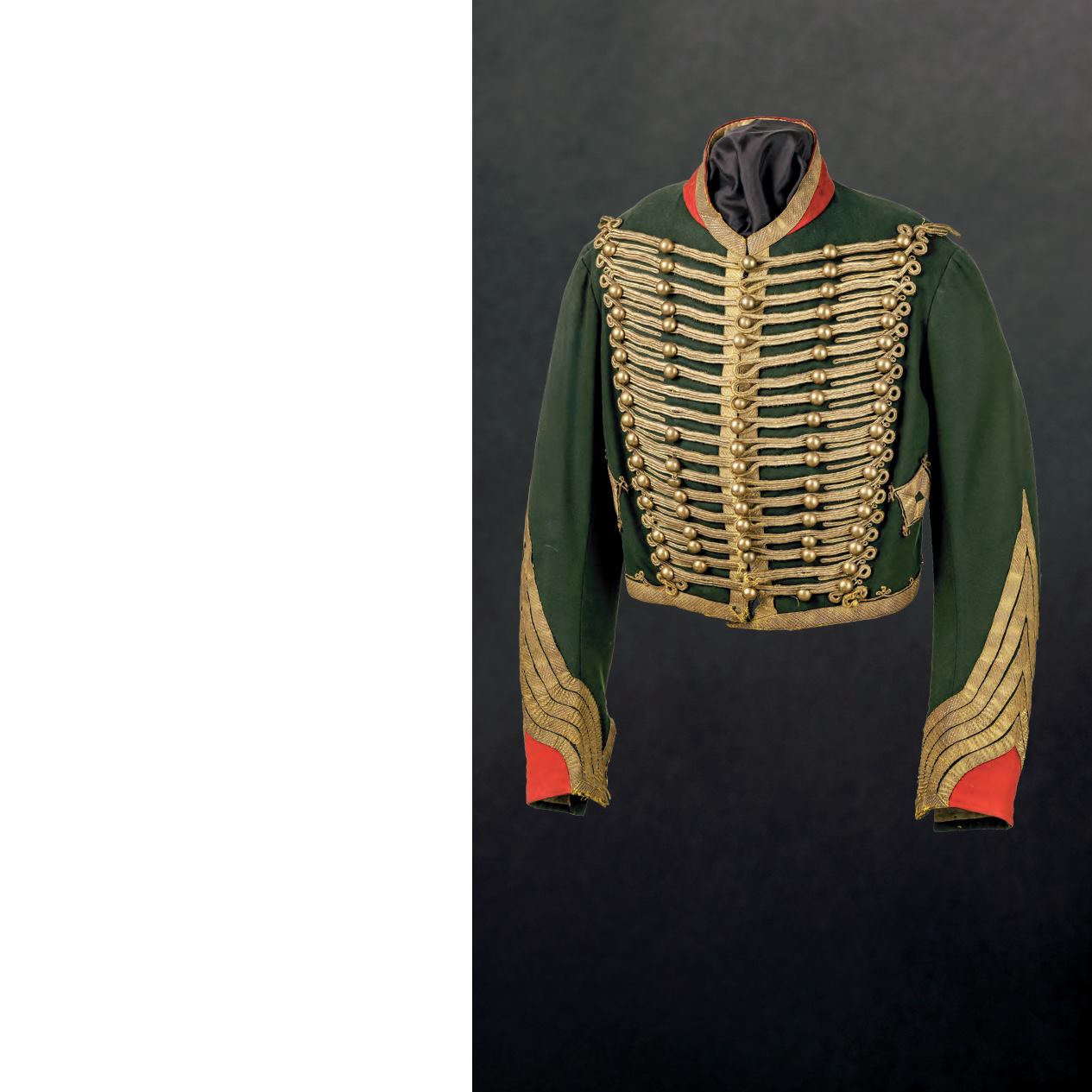
Colonel Emile Félix Count Fleury (1815-84) -
dolman as Colonel of the Guides de la Garde
Impériale 1852
Green cloth with gilt cords (5 x 18 button rows,
eleven buttons missing), five gilt chevrons on
the sleeves (indicating rank), red collar with
gold bullion braid and red lapels, gold bullion
braid at back (seams slightly frayed), black
and green lining. With a hussar’s sash, a hand-
written letter by General Fleury from 1865 and
a collotype of General Felury as colonel of the
Guides. Signs of wear and use.
At the age of 22, Emile Félix Count Fleury
joins the Spahis of General Youssouf as a vol-
unteer and fights in the Battle of the Smalah of
Abd-el-Kader in 1843. As follower and inti-
mate of Napoleon III he took part in the latter’s
coup on 2 December 1851. In 1856 he got pro-
moted to brigade general, “grand ecuyer” and
adjutant of Emperor Napoleon III., division
general (1863), imperial senator, ambassador
to Russia (1869) and senior officer of the
Honour Legion. He is buried at Père Lachaise
cemetery in Paris. The guides regiment was
established in 1852 and belonged to the Garde
Impériale. He was assigned to the reporting
system and staff service. Due to the close
friendship between Napoleon III and his com
mander Count Fleury (until 1860), this fine
regiment was par with the elite Cent Gardes.
244549
II
€ 9.000
6396
|
153